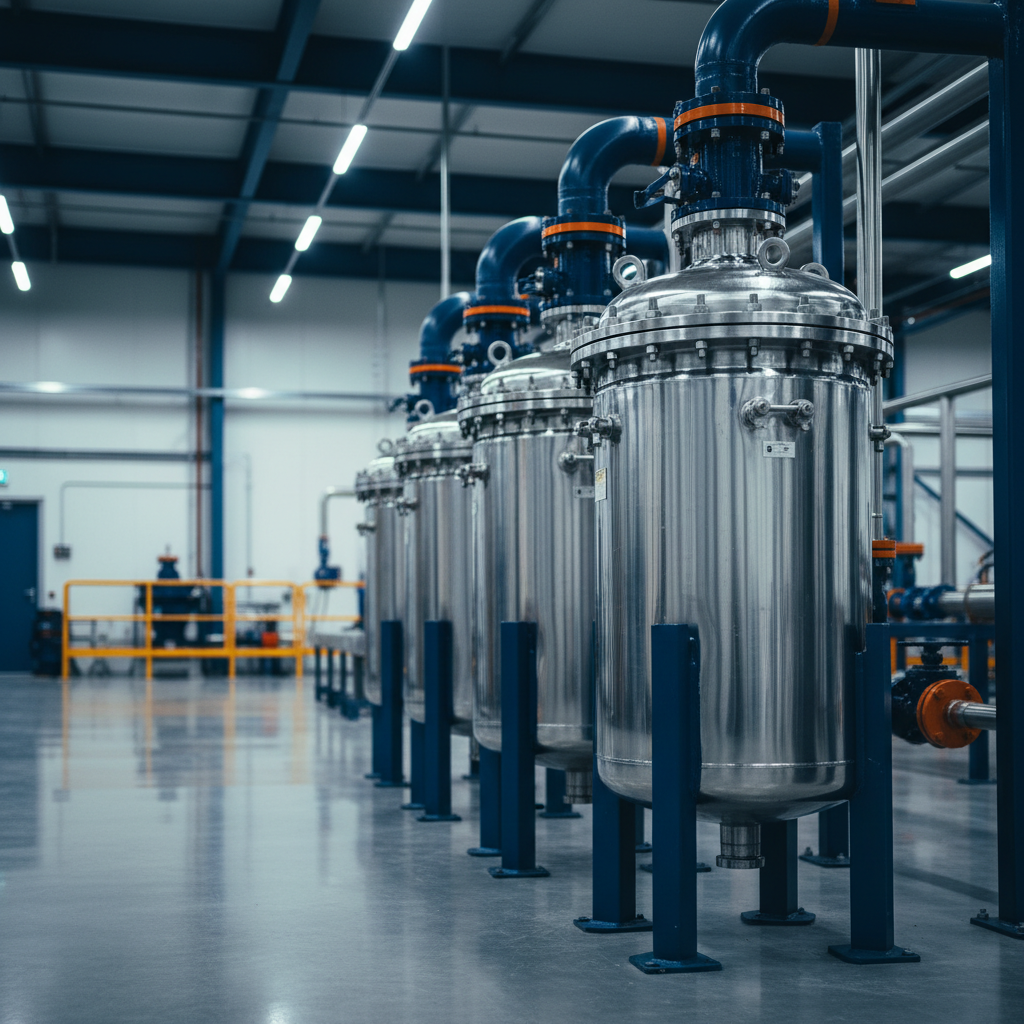
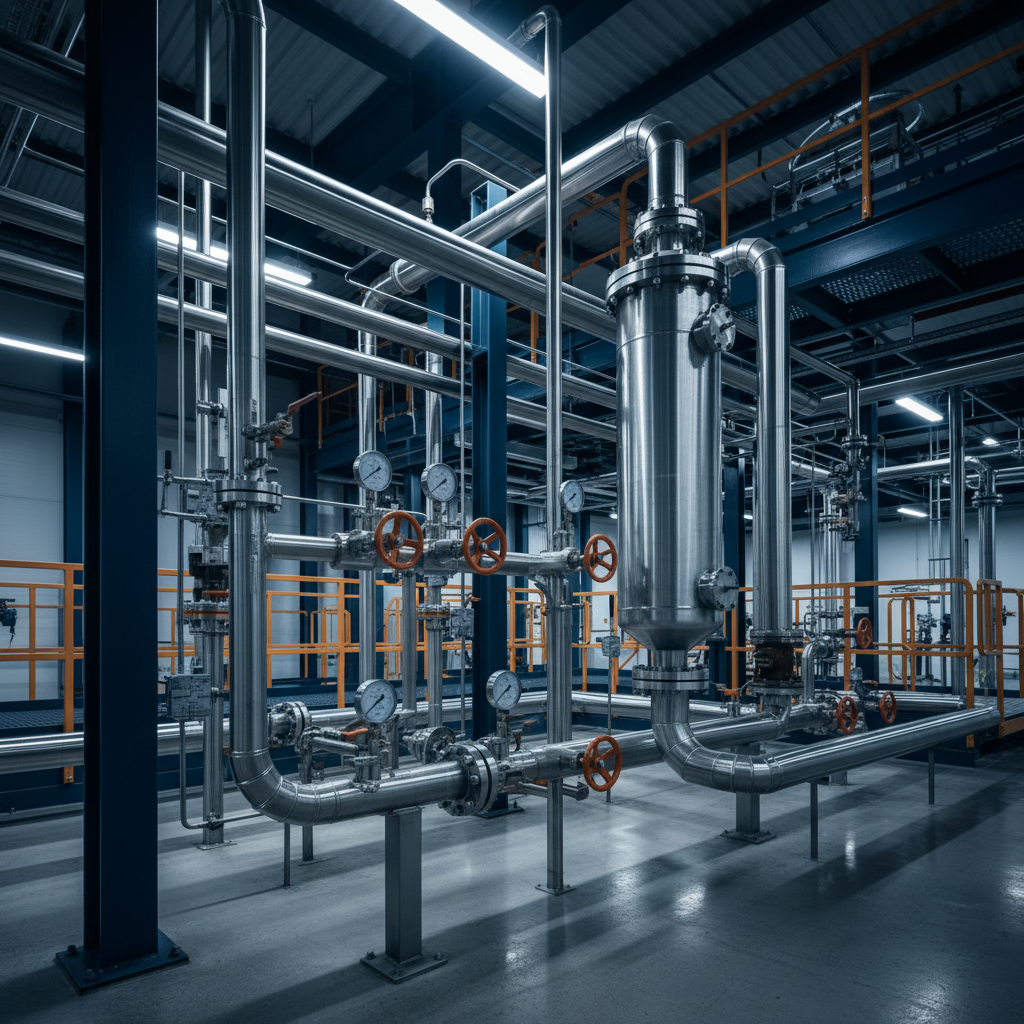
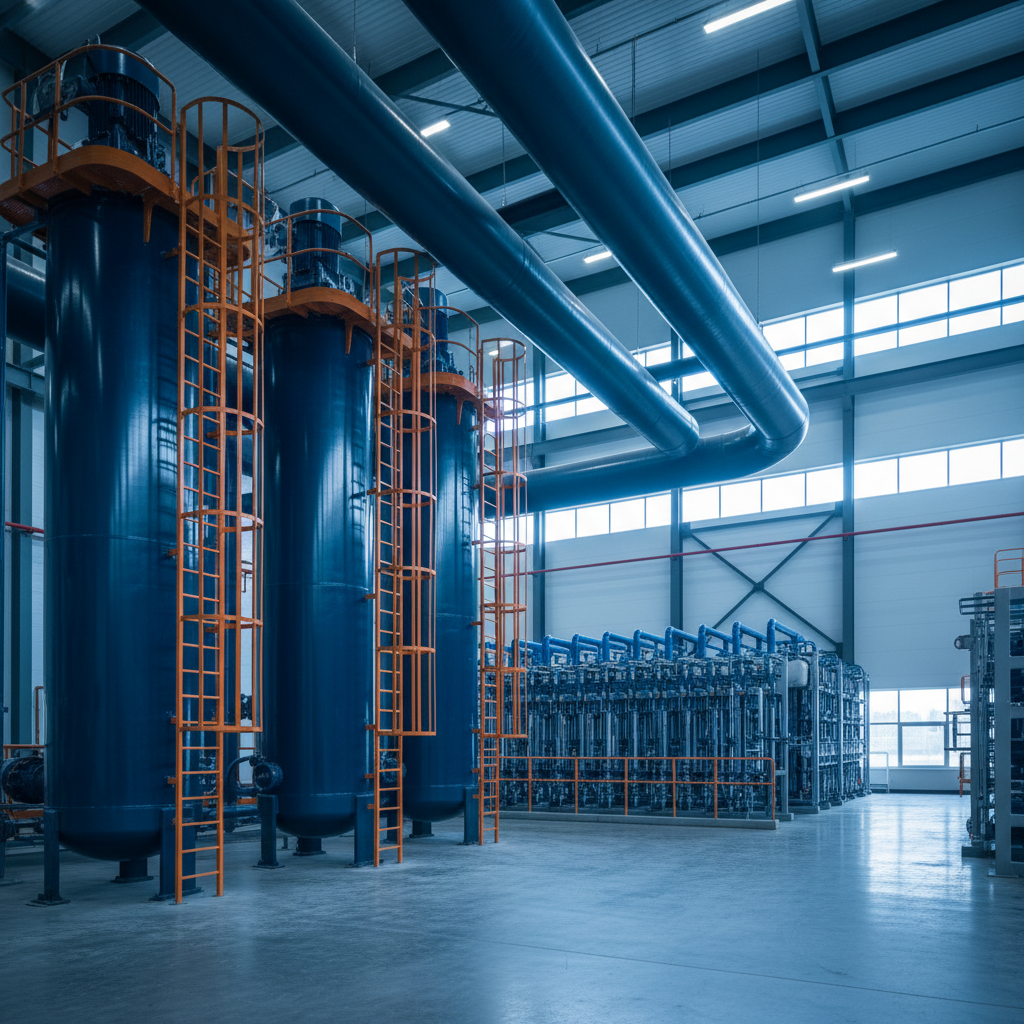
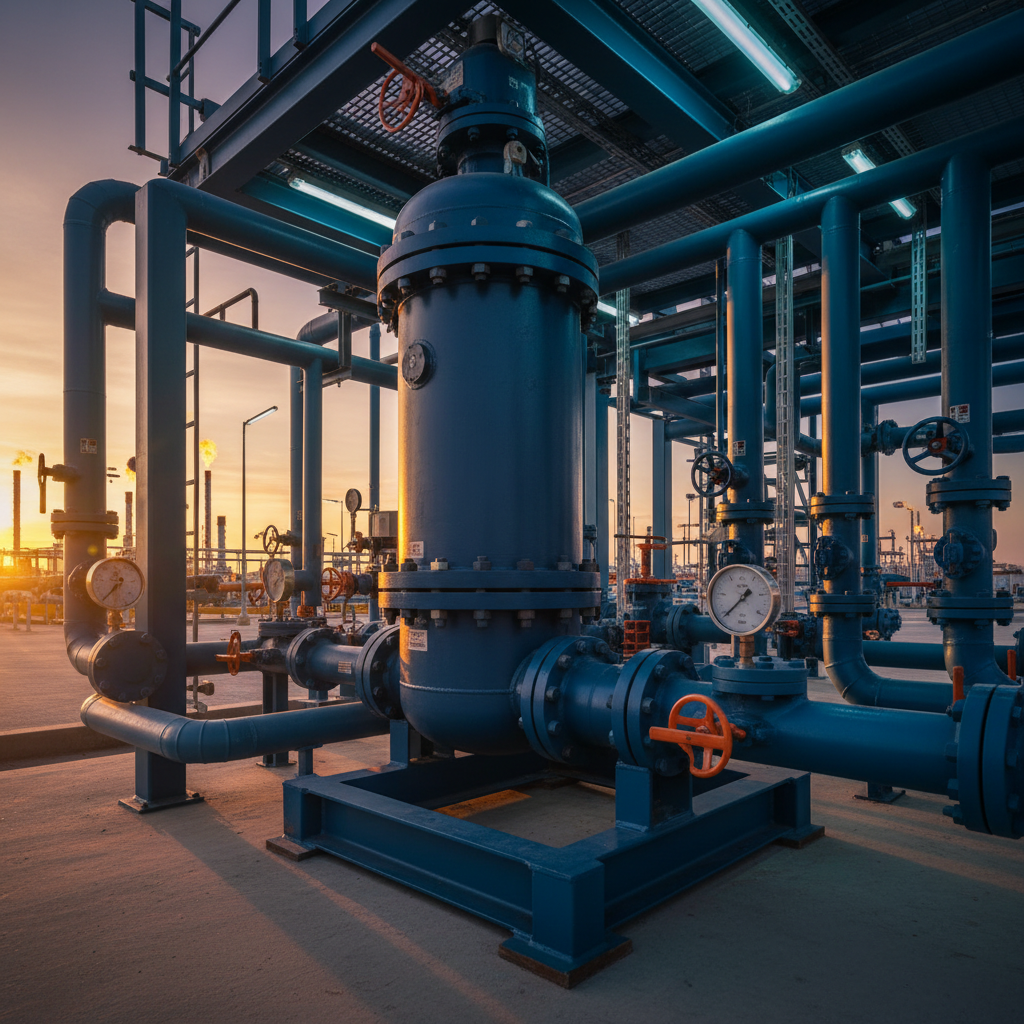
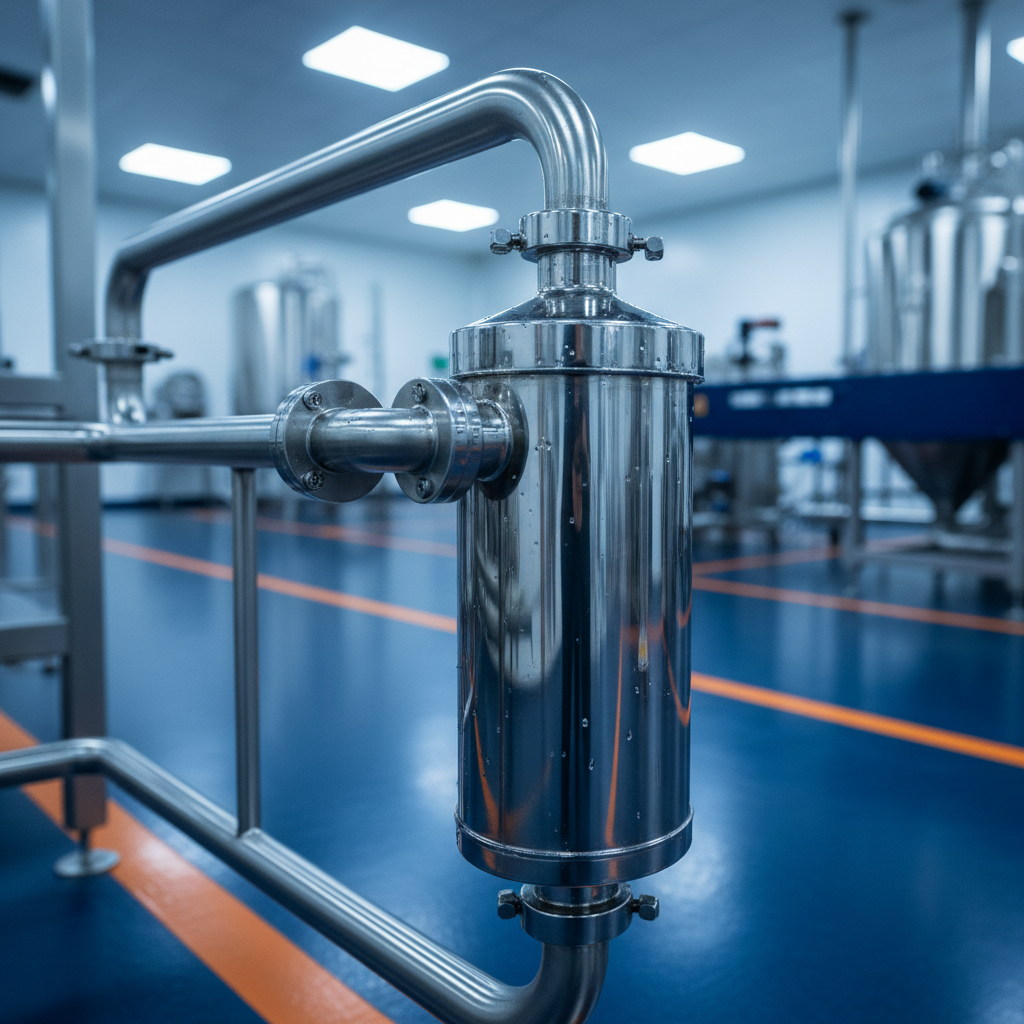
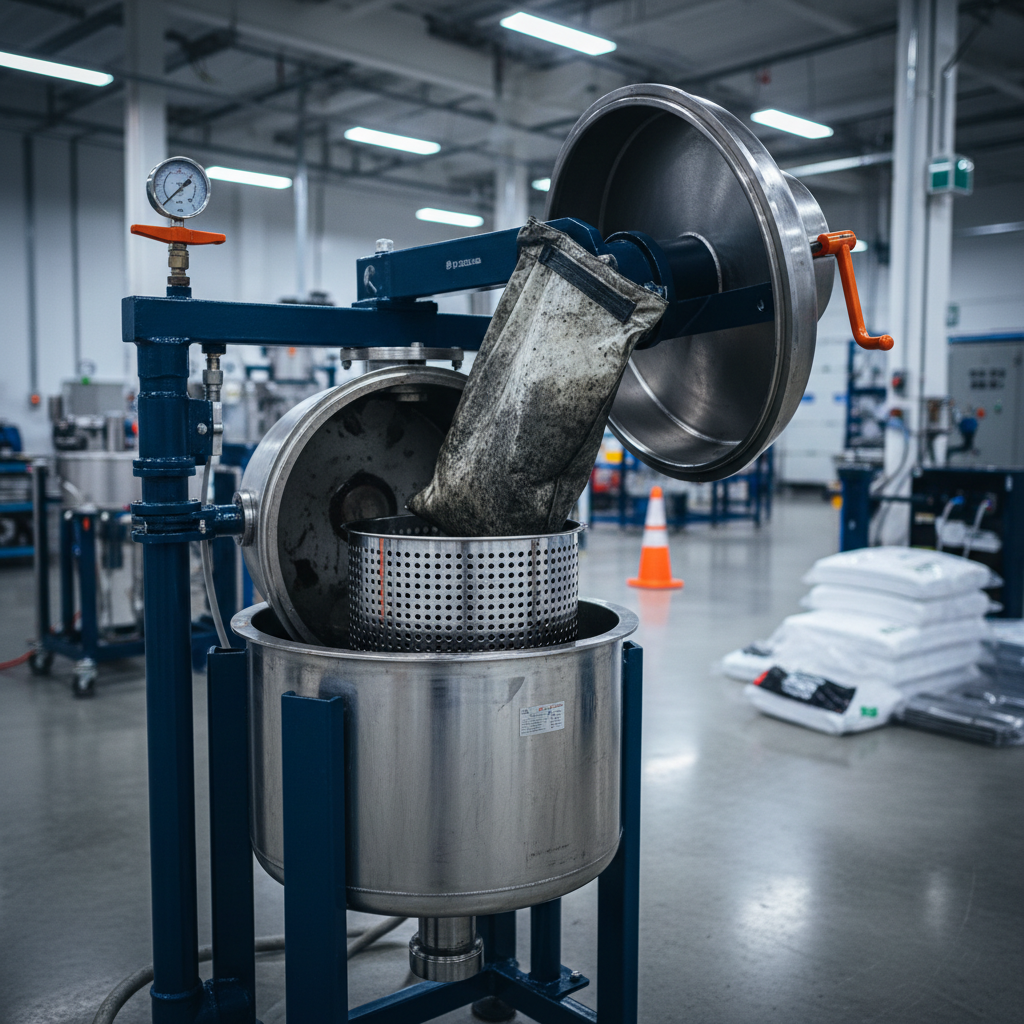
Heavy-duty filter vessels for chemical processors, water treatment plants, oil and gas operations, and food and beverage producers. Bag, cartridge and duplex configurations in carbon and stainless steel — ASME-grade construction, sized to your flow and micron target.
Housing and element: two halves of one filtration stage
A filter vessel is a pressure vessel whose job is to hold a replaceable filter element in the middle of a flowing line. Fluid enters under pressure, passes through the element, leaves its solids behind, and exits clean. The vessel contributes no filtration of its own. What it contributes is everything around the filtration: pressure containment, a leak-tight seal between dirty and clean sides, a closure that opens for service, and the internals that hold the element in position against the force of the flow.
That split matters commercially as much as technically. The vessel is a capital purchase that should last decades; the element is a consumable bought again and again for the life of the line. Sizing, metallurgy, pressure rating and code compliance are vessel decisions that get made once. Micron rating, media type and change-out economics are element decisions that can evolve as the duty changes, inside the same vessel.
Getting the vessel right therefore comes first. An element can be swapped in minutes. A vessel that is undersized, under-rated or made of the wrong metal is a problem bolted into the pipework.
Shell and closure
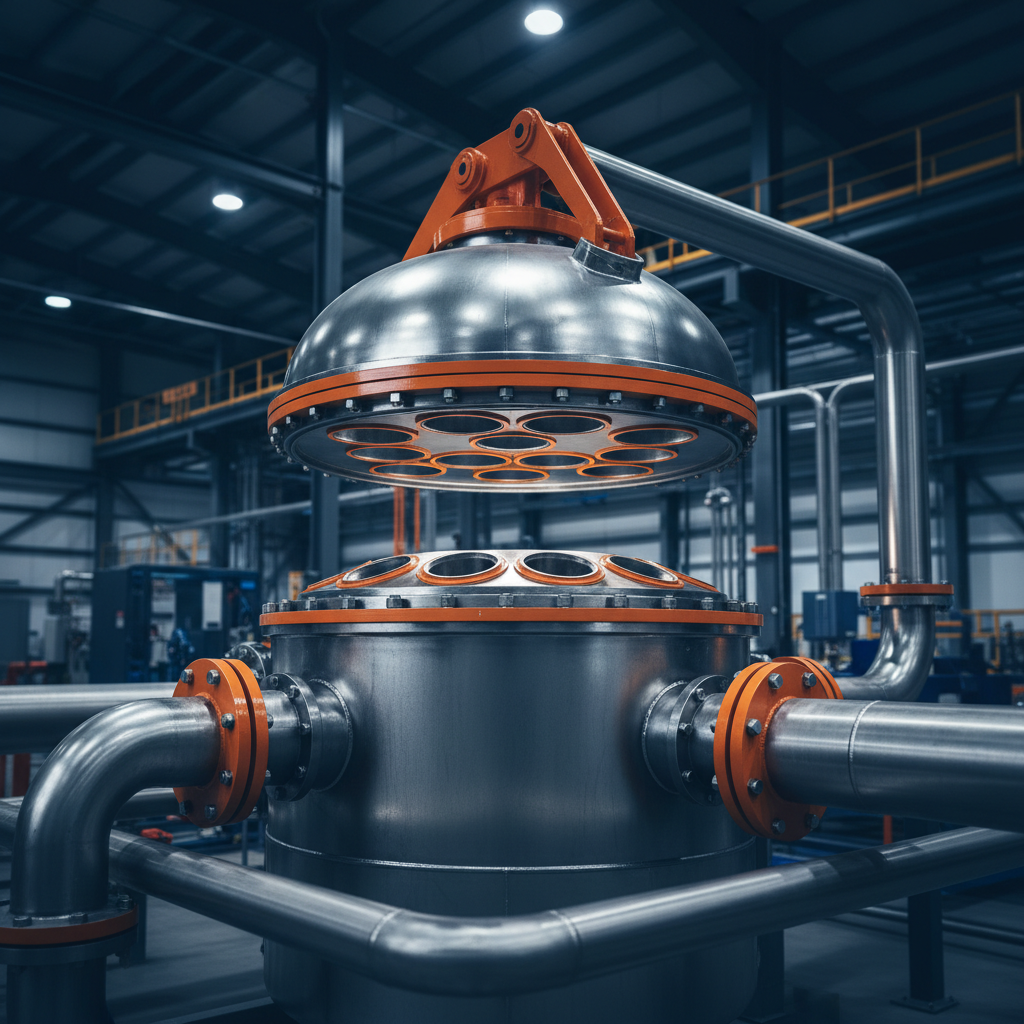
The pressure boundary: a welded cylindrical body with a cover that opens for element access. Swing-eye bolt covers are standard on smaller vessels; larger and heavier covers get a davit arm or spring-assist so one technician can open them safely.
Restrainer basket or tube sheet
Inside a bag vessel, a perforated or mesh basket supports the bag against differential pressure. Multi-round vessels use a tube sheet, a drilled plate that positions and seals each bag or cartridge opening.
The element
The consumable that actually filters: a felt or mesh bag, or a pleated, wound or melt-blown cartridge. Micron rating, efficiency and dirt-holding capacity all live here, not in the vessel.
Vent, drain and gauge ports
A vent to release trapped air on fill and prove zero pressure before opening, a drain to empty the bowl for service, and gauge ports upstream and downstream so differential pressure can be read.
The line-up
Single-bag to duplex: the four configurations
Every filter vessel on the market is a variation on four arrangements. Flow rate decides how many elements the shell must hold, the element format decides the internals, and the process's tolerance for downtime decides whether one vessel is enough.
Single-bag vessels
One shell, one bag, one seal. The workhorse of moderate-flow lines, compact enough to hang in a pipe run on threaded or flanged connections. Size #1 and #2 bags cover most duties, and the low element cost makes single-bag housings the default where solids loading is real but flow is modest.
Side-inlet and in-line flow patterns to suit the piping
Positive bag seal by snap ring, plastic flange or compression ring
Economical entry point for a code-stamped housing
Multi-bag vessels
When one bag cannot carry the flow, the shell gets wider and a tube sheet carries multiple bags in parallel inside a single pressure boundary, commonly four to twenty-four. One vessel, one set of piping, one cover to open at change-out, instead of a bank of small housings.
High-flow duty with a single inlet and outlet connection
Davit or hydraulically assisted covers on large diameters
All bags change on the same schedule, one confined opening
Cartridge vessels
Cartridge housings hold one to a hundred-plus cartridges on a tube sheet or center rods, in standard lengths from 10 to 40 inches. They reach finer and more precise ratings than bags, down to sub-micron and absolute-rated media, which makes them the polishing and final-filtration stage of choice.
Double-open-end and 222/226 single-open-end seat styles
Fine and absolute ratings for product-defining filtration
Often installed downstream of a bag stage that takes the bulk solids
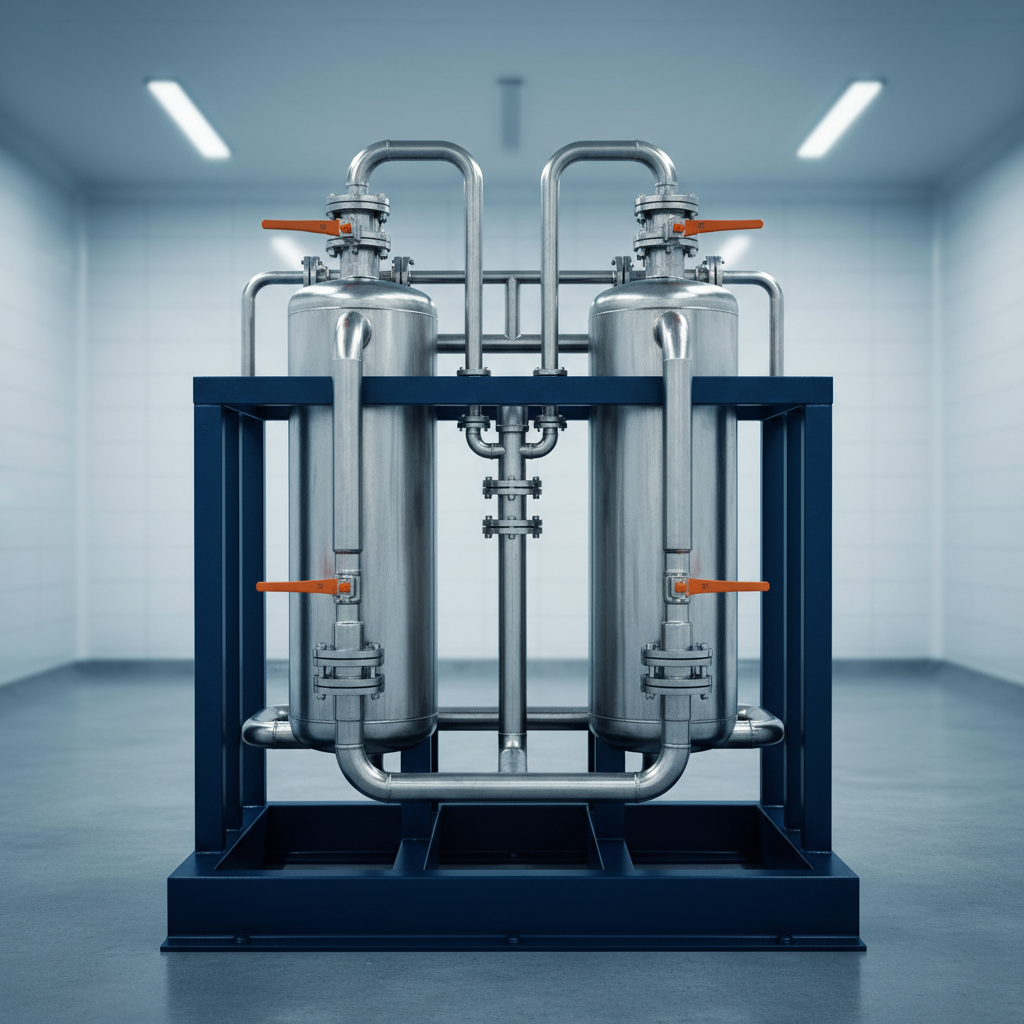
Duplex and parallel arrangements
Two vessels piped in parallel with isolation valves let one side be serviced while the other carries the line, so a continuous process never stops for an element change. Larger plants extend the same idea to banks of vessels with an N+1 spare.
Change elements without shutting the process down
Valve sequencing keeps flow uninterrupted during transfer
Standard practice on continuous chemical, fuel and utility lines
Construction
Materials and the ASME code stamp
A filter vessel is a pressure vessel first and a filter second. The shell material has to survive the fluid, the environment and the cleaning regime for decades, and the design has to carry the line's maximum pressure, at its maximum temperature, with margin for surge.
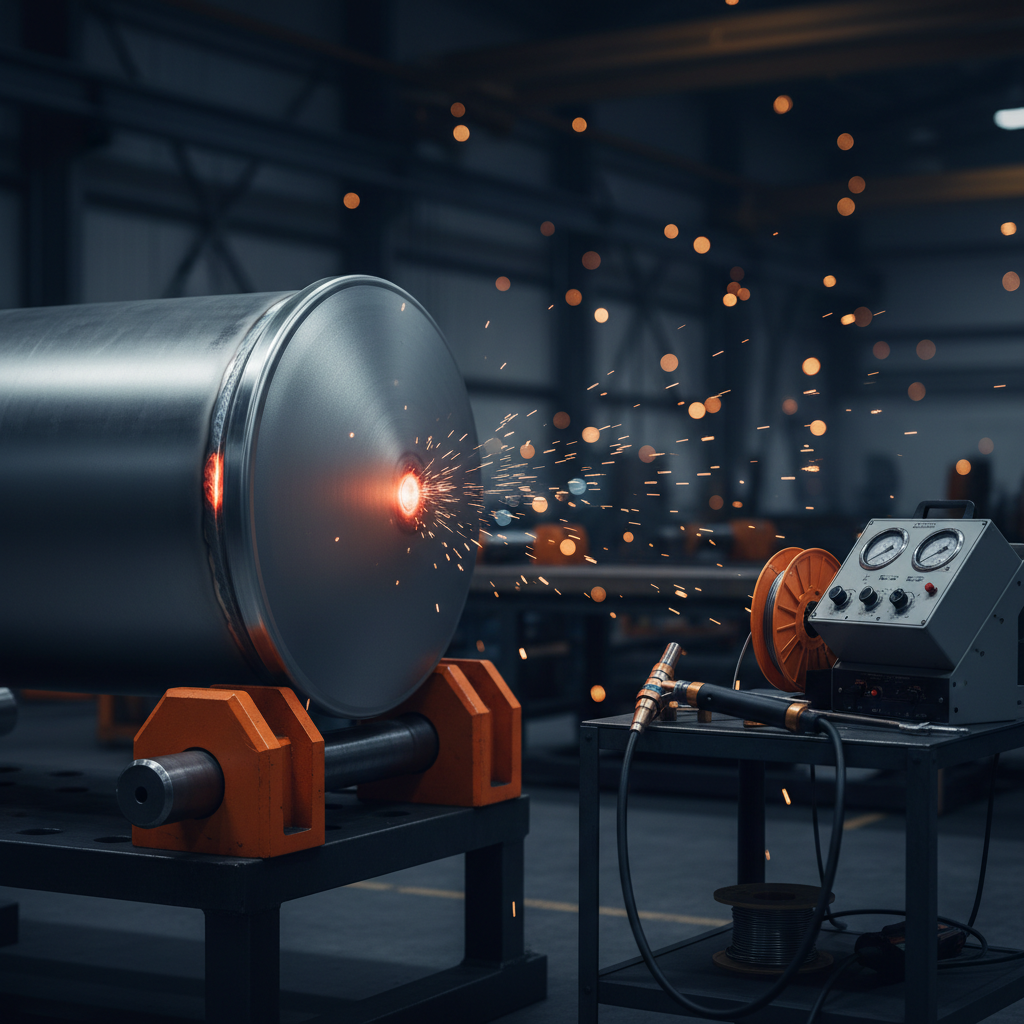
Where the service falls under pressure-vessel regulation, that means design, fabrication, inspection and testing to ASME Boiler and Pressure Vessel Code Section VIII, with the certification mark and a nameplate stating the maximum allowable working pressure and temperature. Jurisdictions outside the United States apply their own regimes, such as PED in Europe and CRN registration in Canada, and plant insurers frequently require code construction even where the law does not. The practical rule: confirm the code requirement before the purchase order, because a stamp cannot be added to a finished vessel.
What the nameplate tells you
Maximum allowable working pressure at a stated temperature, minimum design metal temperature, and the year and shop of fabrication. Operate inside those numbers. Remember that gaskets and elastomers usually give out below the steel's limits, so the seal specification, not the shell, often sets the real temperature ceiling.
Material
Typical service
Notes
Carbon steel
Oils, fuels, hydraulic fluids, non-corrosive process water
The economical default. Usually painted or epoxy-coated; internals can be lined. Not for chlorides, acids or food contact.
304 stainless
General water service, mild chemicals, washdown environments
Good broad corrosion resistance at a moderate premium over carbon steel. The common choice where the fluid is clean but the environment is not.
316 / 316L stainless
Chemicals, chlorides, food and beverage, pharmaceutical
Molybdenum-bearing grade for tougher chemistry. The L low-carbon grade resists weld-zone corrosion, which matters on a welded vessel. Sanitary polish and electropolish finishes available.
Alloys and non-metallics
Severe chemical duty beyond stainless
Duplex stainless, Hastelloy and titanium where chlorides or acids attack 316; polypropylene and FRP housings for aggressive chemicals at low pressure and temperature.
Getting the spec right
Six criteria that decide the selection
Most filter vessel problems in the field are specification problems locked in at purchase. Work through these six before the order goes out, because an undersized shell or the wrong metallurgy cannot be corrected by a better element.
01
Flow rate
Size on the maximum sustained flow, not the average, and check the manufacturer's flow curve for your actual fluid and viscosity. An undersized vessel shows up as high clean pressure drop and short element life, because the media is pushed past its intended flux rate.
02
Design pressure and temperature
The vessel must carry maximum working pressure plus surge at the maximum operating temperature, since ratings de-rate as metal gets hot and gasket materials give out before steel does. Decide early whether the service requires an ASME code stamp, because it cannot be added later.
03
Micron rating and efficiency
A micron number means little without the efficiency behind it. Nominal ratings are a loose average; absolute ratings guarantee a capture efficiency at the stated size. Specify what the downstream process actually needs, because filtering finer than necessary just shortens element life.
04
Pressure drop budget
Decide how much differential pressure the system can spend across the filtration stage, clean and dirty. A well-sized vessel runs a low clean pressure drop and leaves room for the element to load before the change-out limit. Include the change-out differential in the hydraulic design of the line.
05
Materials and seals
Match the shell to the fluid and the environment, and match every elastomer to the fluid at operating temperature: Buna-N for oils and fuels, EPDM for water and steam, Viton for chemicals and heat, PTFE-encapsulated where nothing else survives. Seals fail before housings do.
06
Connections and closure
Match port style and size to the piping: NPT on small lines, ANSI flanges on process duty, tri-clamp on sanitary lines. Then think about the closure as a maintenance feature: the cover someone opens every month should not need a crane, a cheater bar or three people.
Where they are used
Applications by industry
The vessel is the same machine everywhere: a shell, a closure and an element. What changes between industries is pressure, chemistry, hygiene and the cost of stopping the line, and those four rewrite the specification each time.
Chemical processing
Prefiltration of feedstocks, catalyst recovery, and polish filtration before packaging all run through filter vessels. Material selection dominates the specification: the wetted metallurgy and every elastomer must survive the fluid at operating temperature, and a code stamp is usually mandatory in a rated process area.
316L, duplex stainless or alloy shells matched to the chemistry
Viton or PTFE-encapsulated seals for aggressive fluids
ASME Section VIII construction as standard practice
Water and wastewater treatment
Filter vessels guard membranes, UV trains, nozzles and heat exchangers from the particulate that would foul them. Prefiltration here is protective rather than product-defining, so ratings run coarser and flow runs high, which favors multi-bag and multi-cartridge vessels.
Coarser ratings protecting RO membranes and heat exchangers
High-flow multi-round vessels ahead of treatment trains
Epoxy-coated carbon steel or stainless to suit water chemistry
Oil and gas
Fuel and produced-water filtration, amine and glycol loop cleanup, and completion-fluid filtration all rely on heavy-wall filter vessels. Design pressures run far above general industry, welds are fully documented, and housings are specified to pipeline and refinery standards rather than catalog defaults.
High design pressures with full weld documentation
Carbon steel shells with coatings for sour and saline service
Skid-mounted duplex sets for continuous pipeline duty
Food and beverage
Syrups, edible oils, brines, juices and process water are filtered through sanitary-grade vessels: 316L construction, polished product-contact surfaces, tri-clamp connections and self-draining geometry so nothing pools between cleanings. Housings must stand up to hot caustic clean-in-place cycles.
316L shells with sanitary interior finishes
Tri-clamp connections and CIP-compatible design
Food-grade elastomers on all product-contact seals
Pharmaceutical and high purity
Upstream of sterile filtration, vessels handle bioburden reduction and particulate control in WFI, buffers and intermediates. Electropolished 316L, full material traceability and documentation packages are the norm, and housings are designed to validate and to drain completely.
Paints, coatings and inks
Every batch passes through bag or cartridge vessels to catch gels, skins and oversize pigment before filling. Fast change-outs matter because color changes are frequent, so quick-open closures and low-residue bowl designs earn their keep in this service.
Consumables
Element types and what they are for
The vessel decides how much media the line gets; the element decides what that media does. These four families cover the vast majority of bag and cartridge duty.
Element type
Typical range
Characteristics
Change-out trigger
Felt filter bags
1 to 200 micron nominal
Needle-punched polypropylene or polyester depth media. High solids capacity and low cost make them the bulk-solids workhorse. Welded-seam and glazed finishes reduce fiber shedding.
On differential pressure, before bag breakthrough
Mesh filter bags
50 to 800 micron
Woven nylon or polyester monofilament with a defined pore size. Surface capture, and in some services washable and reusable. Suited to coarse classification and product recovery.
Clean or replace at differential limit
Pleated cartridges
0.5 to 100 micron, nominal and absolute
High surface area in a compact form gives fine, consistent ratings at low clean pressure drop. The standard for polishing stages and product-defining filtration.
On differential, per the manufacturer's limit
Melt-blown and wound cartridges
1 to 100 micron nominal
Depth media that traps particles through its thickness, tolerant of gels and deformable solids that would blind a surface medium quickly. Economical in high-volume duty.
On differential, shorter life on heavy solids
In the field
Change-out and maintenance practice
A correctly specified vessel still underperforms if it is installed where nobody can service it, or run without a differential baseline. These habits separate vessels that run quietly for decades from vessels that become a recurring work order.
The safe opening sequence
1Isolate the vessel from the line on both sides.
2Vent to release pressure, and confirm zero pressure at the vent.
3Drain the bowl so the element comes out without a flood.
4Open the closure, lift the element straight out, and inspect the basket and seal.
5Seat the new element, verify the seal, close and torque the cover, then refill and vent before returning to service.
Change on differential pressure, not the calendar
Record the clean pressure drop at normal flow and temperature the day a new element goes in, and change out at the manufacturer's stated limit. Time-based schedules either waste element life or miss an early blinding event, and a loaded element run too long can rupture and dump its solids downstream.
Leave room to actually service it
The element comes out vertically, and the cover needs its swing or davit arc. Confirm extraction height and handle clearance against surrounding steelwork before the vessel is piped in. A vessel that needs scaffolding for a bag change will quietly stop being serviced on schedule.
Read the differential at operating temperature
Pressure drop tracks viscosity, so a cold start on a heavy fluid can read near the change-out limit on a clean element. Baseline and judge the reading at normal operating conditions, and treat cold-start readings as a separate curve.
Inspect the seal and the basket every change
The cover O-ring and the bag seal surface are the two places a vessel bypasses. Check the O-ring for flattening, nicks and chemical attack, and the restrainer basket for dents or torn mesh that would let a bag extrude through. Both are cheap; what they protect is not.
Watch for bypass, not just blockage
A differential reading that never climbs is as suspicious as one that climbs fast. It usually means fluid is going around the element: a bag unseated from its ring, a cartridge missing its seat cup, or a wrong-size element swimming in the basket.
Treat rising change-out frequency as a symptom
If element life keeps shortening, the filter is reporting a problem somewhere else: a failing upstream component shedding solids, water or gels in the fluid, or a process change nobody told maintenance about. Analyze the spent element rather than just buying more of them.
Common questions
Filter vessel FAQ
What is a filter vessel?
A filter vessel is a pressure vessel that houses a replaceable filter element, usually a bag or a cartridge, in a liquid or gas process line. The vessel provides pressure containment, a sealed closure for element access, and internals that hold the element in position. The element inside does the actual filtering; the vessel is the long-lived asset around it.
Are 'filter vessel' and 'filter housing' the same thing?
In practice, yes. 'Housing' is the broader trade term and is used down to small clear-bowl units; 'vessel' tends to be used once the housing is a fabricated, code-designed pressure vessel with a welded shell and a bolted or clamped closure. Manufacturers use the words interchangeably for industrial equipment.
Bag or cartridge, which should I specify?
Bags favor high flow and high solids loading at coarser ratings, with fast, cheap change-outs and less waste volume per change. Cartridges reach finer and more precise ratings, including absolute-rated and sub-micron media, and suit lower solids duty and polishing. Many lines run both: a bag stage takes the bulk solids, a cartridge stage delivers the final cleanliness.
What does an ASME code stamp mean, and do I need one?
A code-stamped vessel is designed, fabricated, inspected and pressure-tested to ASME Boiler and Pressure Vessel Code Section VIII, and carries a nameplate stating its maximum allowable working pressure and temperature. Whether you need it depends on your jurisdiction, your insurer and your site standards, and most process plants require it as a matter of policy. Confirm before buying a non-code housing, because a stamp cannot be added after fabrication.
Carbon steel, 304 or 316 stainless, how do I choose?
Carbon steel is the economical choice for oils, fuels and non-corrosive water, usually painted or epoxy-coated. 304 stainless covers general water service and washdown environments. 316 and 316L handle chlorides, chemicals and food or pharmaceutical contact, with the low-carbon L grade preferred on welded shells. Beyond that, duplex stainless, Hastelloy and non-metallic housings cover severe chemical duty.
What design pressures are typical?
General industrial bag and cartridge vessels are commonly designed around 150 psi, with standard options at higher ratings for pump-fed process duty, and heavy-wall vessels built to order for high-pressure service such as pipelines and hydraulic systems. What matters is that the vessel's maximum allowable working pressure, at your operating temperature, exceeds the line's maximum pressure including surge.
When should the element be changed?
Change on differential pressure, not on the calendar. Record the clean pressure drop across the vessel at normal flow and temperature, then change when the differential reaches the manufacturer's limit for that element. Running past it risks bag breakthrough or cartridge collapse, which releases the collected contaminant downstream in one slug.
What is the difference between nominal and absolute micron ratings?
A nominal rating is a loose average with no guaranteed capture efficiency, and two nominal 10-micron elements from different makers can perform very differently. An absolute rating guarantees a defined efficiency at the stated particle size. Specify absolute media where the downstream process defines the requirement, and save nominal media for protective duty.
Can the same vessel take bags and cartridges?
Sometimes. Several manufacturers offer conversion baskets or adapters that let a bag housing accept cartridges, which is useful when a duty gets finer over time. It is a supported accessory, not a universal fit, so confirm compatibility with the vessel maker rather than assuming any cartridge will seat and seal correctly.
Why is my element blinding early?
The usual suspects, in order: an undersized vessel pushing flow through too little media area, an upstream contamination source that filtration is masking rather than fixing, a rating finer than the duty actually needs, gels or deformable solids blinding a surface medium that should be a depth medium, and change-out judged from a cold, viscous start-up reading instead of the operating baseline.
Is it safe to open a filter vessel under pressure?
Never. The correct sequence is to isolate the vessel, vent it to release pressure, confirm zero pressure at the vent, then drain before touching the closure. Quick-open closures make this discipline more important, not less. Treat every cover like the pressure-retaining component it is.
Talk to someone
Send your duty conditions and get a straight answer
Sizing a filter vessel well takes a handful of numbers and a fluid name. Send the flow rate, operating pressure and temperature, fluid and viscosity, and the micron target you are working to, and your inquiry will be routed to a specialist who works in that service.
Flow rate at maximum sustained conditions
Operating and maximum pressure, plus surge if known
Operating temperature range
Fluid, viscosity and expected solids loading
Target micron rating, nominal or absolute
Bag or cartridge preference, connection style and size, and any code stamp requirement